
Human Sexuality & Clinical Practice: Biological, Psychological, and Cultural Perspectives
This asynchronous continuing education course provides structured clinical training in Human Sexuality & Clinical Practice: Biological, Psychological, and Cultural Perspectives. It is designed for LMFTs, LCSWs, LPCCs, and Registered Associates and combines online text, instructional video modules, downloadable resources, case…
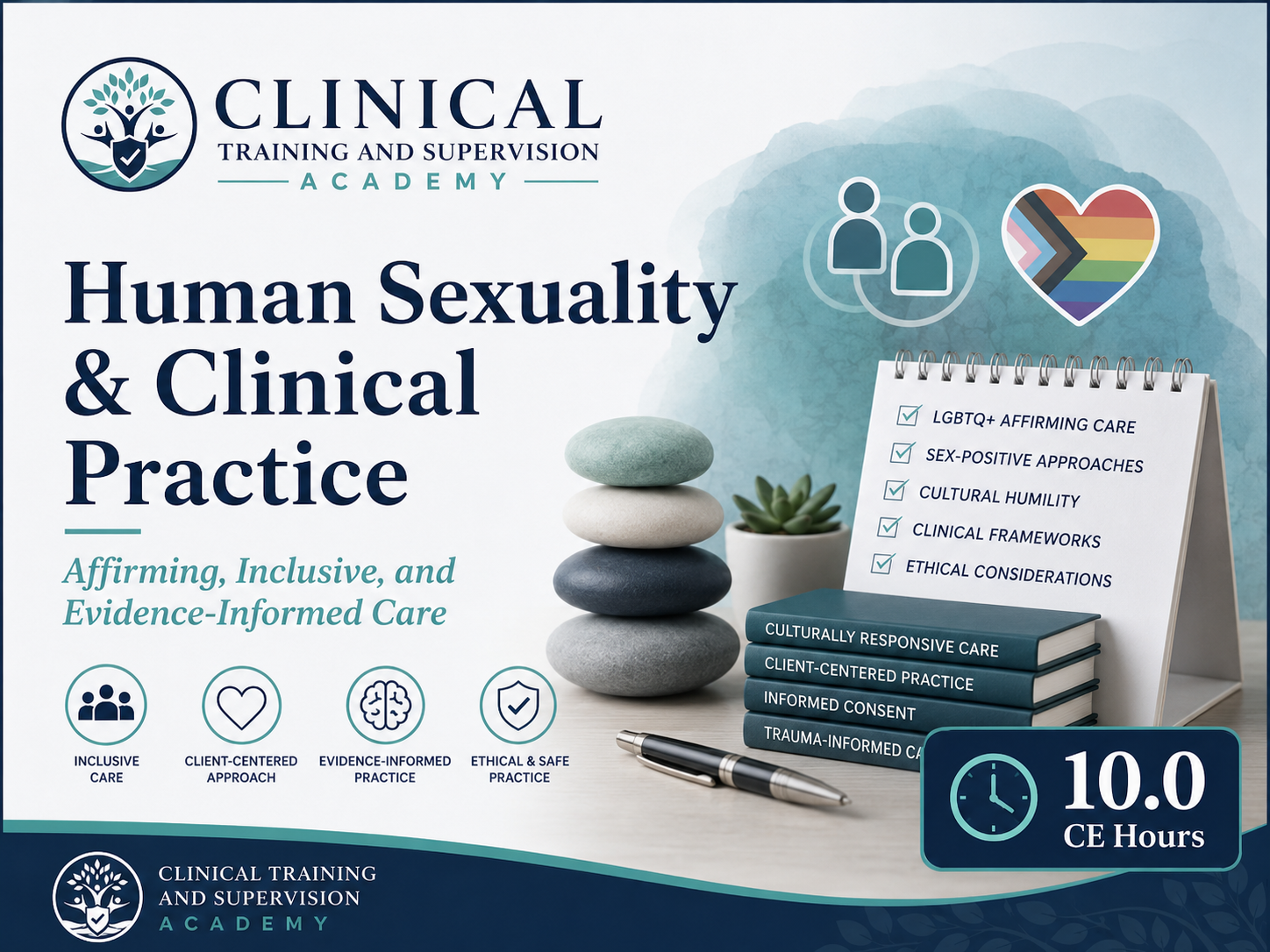
Course Description
This asynchronous continuing education course provides structured clinical training in Human Sexuality & Clinical Practice: Biological, Psychological, and Cultural Perspectives. It is designed for LMFTs, LCSWs, LPCCs, and Registered Associates and combines online text, instructional video modules, downloadable resources, case studies, and clinical application exercises.
Course Information
- Course Level: Intermediate
- Target Audience: LMFTs, LCSWs, LPCCs, and Registered Associates
- Instructional Method: Asynchronous Distance Learning (online text, instructional video modules, downloadable resources, case studies, and clinical application exercises)
- CE Credits: 10 CE Hours (600 Minutes of Active Instruction)
- Presenter/Author: Candice Fuimaono, MS, LMFT
Educational Goals
- Strengthen an integrated understanding of human sexuality across biological, psychological, developmental, relational, and cultural domains.
- Enhance competence in sexual-health assessment and treatment planning within general mental health practice.
- Increase confidence in conducting affirming, culturally responsive, and trauma-informed discussions of sexuality.
- Expand knowledge of evidence-based interventions for sexual dysfunction, intimacy concerns, and sexual anxiety.
- Improve responsiveness to identity development, minority stress, stigma, trauma, and diverse relationship structures.
- Strengthen ethical decision-making related to boundaries, clinician bias, erotic transference, countertransference, and dual relationships.
What Participants Will Learn
- Identify the four phases of the human sexual response cycle and one physiological marker associated with each phase.
- Apply DSM-5-TR criteria and differential-assessment principles to distinguish sexual dysfunction diagnoses from medical, medication-related, psychological, and relational contributors.
- Apply a structured sexual-history intake framework during a clinical assessment.
- List three evidence-based therapeutic interventions used to address intimacy concerns, sexual anxiety, or sexual dysfunction.
- Describe three ways developmental trauma, minority stress, stigma, or identity development may affect adult sexual expression and well-being.
- Apply at least two culturally responsive and affirming practices when working with diverse sexual orientations, gender identities, consensual non-monogamy, kink, or BDSM.
- Identify three ethical boundary requirements related to sexual attraction, erotic transference, countertransference, or dual relationships and select appropriate consultation or documentation responses.
Instructional Modules
Enroll in this course to unlock all modules and the final quiz.
-
1Foundations of Human Sexuality60 min
Summary of Main Points
- Historical perspectives on human sexuality
- Sexual health as a component of overall wellness
- Cultural influences on attitudes and beliefs
- Diversity in sexual expression and identity
- Common myths and misconceptions
- Language, values, and clinician self-awareness
- Role of mental health professionals in sexual-health discussions
-
2Physiological Foundations of Sexual Functioning60 min
Summary of Main Points
- Human sexual response cycle
- Desire, arousal, orgasm, and resolution
- Neurobiology and hormonal influences
- Impact of medications on sexual functioning
- Chronic illness, disability, and aging
- Medical contributors and referral considerations
- Integration of biological and psychological factors
-
3Psychosexual Development Across the Lifespan60 min
Summary of Main Points
- Development of sexual identity
- Lifespan perspectives on sexuality
- Attachment and relational influences
- Family, cultural, and societal factors
- Developmental milestones and challenges
- Sexual wellness across life stages
- Clinical implications for assessment and treatment
-
4Clinical Assessment and Sexual-History Taking60 min
Summary of Main Points
- Creating a safe and affirming assessment environment
- Structured sexual-history intake procedures
- Communication strategies for sensitive topics
- Assessment of sexual concerns and functioning
- Relational, cultural, and contextual factors
- Consent, safety, and trauma considerations
- Documentation and referral practices
-
5Sexual Dysfunctions and Diagnostic Considerations60 min
Summary of Main Points
- DSM-5-TR sexual dysfunction diagnoses
- Medical, medication-related, psychological, and relational contributors
- Primary versus secondary presentations
- Situational versus generalized presentations
- Differential assessment and diagnostic uncertainty
- Treatment planning and interdisciplinary collaboration
- Referral to medical and specialized providers
-
6Identity, Diversity, and Minority Stress60 min
Summary of Main Points
- Gender identity and sexual orientation diversity
- LGBTQ+ affirmative practice
- Minority Stress Theory
- Consensual non-monogamy, kink, and BDSM-informed care
- Cultural humility and inclusive language
- Clinician bias and assumptions
- Health disparities and barriers to care
-
7Trauma, Intimacy, and Sexual Well-Being60 min
Summary of Main Points
- Impact of developmental and interpersonal trauma on sexuality
- Sexual assault and recovery considerations
- Body image and sexual self-concept
- Intimacy and relationship challenges
- Shame, stigma, and avoidance
- Trauma-informed pacing and consent
- Clinical interventions and referral considerations
-
8Evidence-Based Treatment Approaches60 min
Summary of Main Points
- Cognitive Behavioral Therapy for sexual concerns
- Sensate Focus interventions
- Couples-based and systemic approaches
- Anxiety-reduction and exposure-based strategies
- Communication and intimacy enhancement
- Strengths-based treatment planning
- Monitoring progress and adapting intervention
-
9Ethics, Boundaries, and Professional Practice60 min
Summary of Main Points
- Ethical responsibilities related to sexuality
- Professional boundaries and dual relationships
- Erotic transference and countertransference
- Managing clinician discomfort, attraction, and bias
- Consultation, referral, and scope of competence
- Risk management and documentation
- Application through clinical scenarios
-
10Clinical Integration and Final Review60 min
Summary of Main Points
- Integration of biological, psychological, relational, and cultural perspectives
- Complex case conceptualization
- Clinical decision-making exercises
- Ethical consultation and referral considerations
- Treatment planning across diverse presentations
- Review of major course concepts
- Professional-development and resource planning
Course Completion Requirements
- Complete all required instructional modules and embedded learning activities.
- Earn a score of at least 70% on the final examination. Participants may repeat the examination until the passing score is achieved.
- Complete the course-specific evaluation, including a rating for each measurable learning objective.
- Submit the required course-completion attestation for asynchronous distance learning.
- A CE certificate is issued only after all completion requirements are satisfied.
References
- American Psychiatric Association. (2022). Diagnostic and statistical manual of mental disorders (5th ed., text rev.).
- Hertlein, K. M., Weeks, G. R., & Sendak, S. K. (2020). Systemic sex therapy (3rd ed.). Routledge.
- Kleinplatz, P. J. (2022). Magnificent sex: Lessons from extraordinary lovers. Routledge.