
HIV/AIDS and Mental Health: Clinical Implications, Stigma, and Ethical Practice
This asynchronous continuing education course provides structured clinical training in HIV/AIDS and Mental Health: Clinical Implications, Stigma, and Ethical Practice. It is designed for LMFTs, LCSWs, LPCCs, LEPs, associates, trainees, supervisors, and other behavioral health professionals and combines online text,…
Course Description
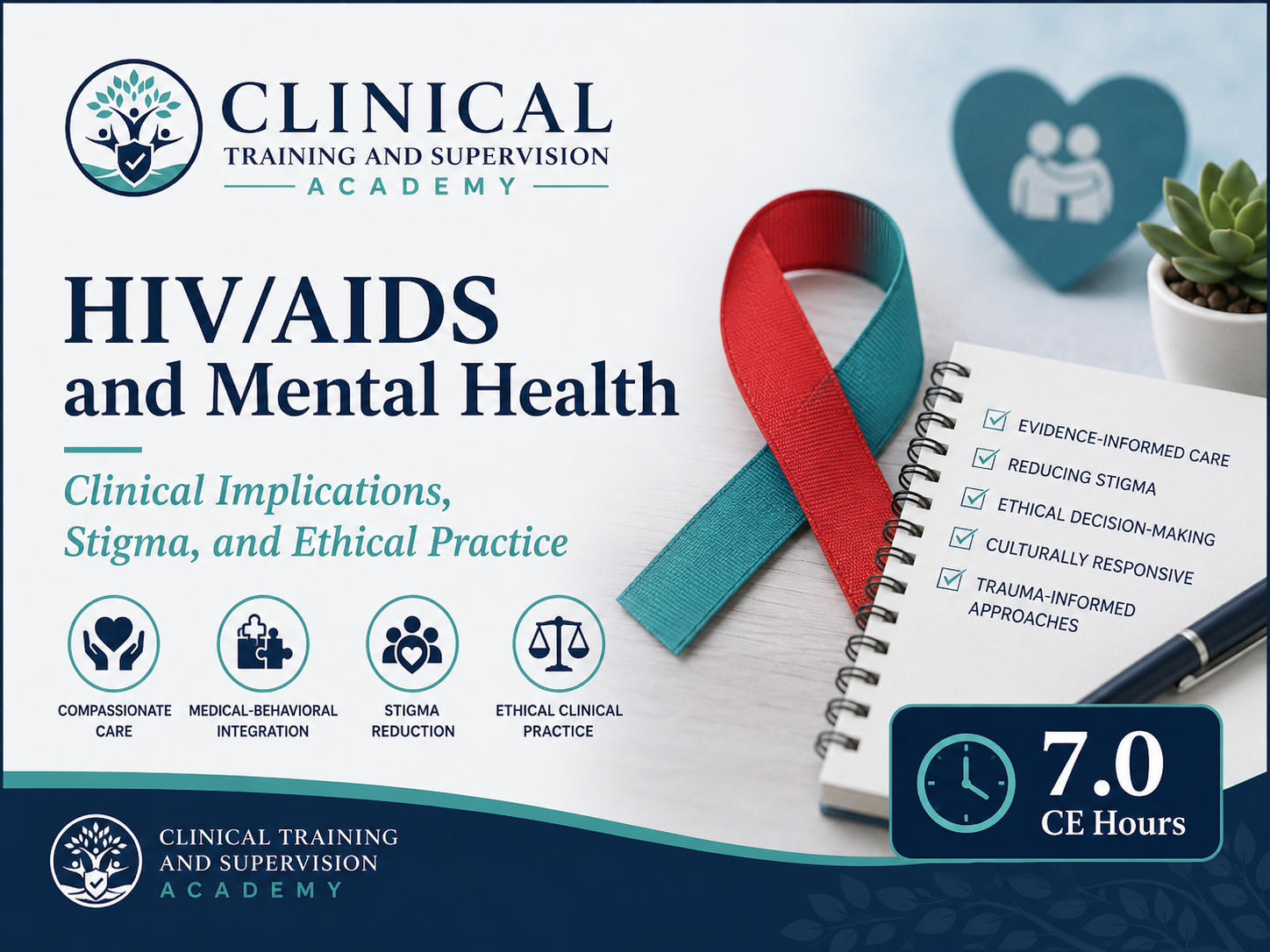
This asynchronous continuing education course provides structured clinical training in HIV/AIDS and Mental Health: Clinical Implications, Stigma, and Ethical Practice. It is designed for LMFTs, LCSWs, LPCCs, LEPs, associates, trainees, supervisors, and other behavioral health professionals and combines online text, instructional video modules, downloadable resources, case studies, and clinical application exercises.
Course Information
- Course Level: Intermediate
- Target Audience: LMFTs, LCSWs, LPCCs, LEPs, associates, trainees, supervisors, and other behavioral health professionals
- Instructional Method: Asynchronous Distance Learning (online text, instructional video modules, downloadable resources, case studies, and clinical application exercises)
- CE Credits: 7 CE Hours (420 Minutes of Active Instruction)
- Presenter/Author: Candice Fuimaono, MS, LMFT
Educational Goals
- Strengthen knowledge of HIV epidemiology, transmission, prevention, and current medical management relevant to behavioral health practice.
- Enhance clinical responsiveness to the psychological, emotional, neurocognitive, and behavioral health concerns experienced by people living with HIV.
- Increase culturally responsive and stigma-informed care across diverse identities, communities, and healthcare contexts.
- Improve assessment, treatment planning, intervention, and interdisciplinary collaboration for HIV-related behavioral health needs.
- Expand knowledge of California confidentiality, documentation, and ethical responsibilities involving HIV-related information.
- Promote resilience, self-advocacy, wellness, and long-term quality of life.
What Participants Will Learn
- Identify three HIV transmission pathways, three prevention strategies, and the role of current medical management in supporting health outcomes.
- Describe four common psychological, emotional, or behavioral health concerns experienced by people living with HIV/AIDS.
- Identify three ways stigma, minority stress, discrimination, or social determinants of health may affect treatment access, engagement, or outcomes.
- Apply an evidence-based assessment and treatment-planning process to a clinical case involving HIV-related mental health concerns.
- Identify at least three clinical features that may indicate HIV-Associated Neurocognitive Disorders or co-occurring behavioral health concerns and select appropriate referral or consultation steps.
- Identify at least four California confidentiality, informed-consent, release-of-information, or documentation requirements related to HIV information.
- Apply an ethical decision-making framework to a case involving disclosure, confidentiality, partner-notification concerns, or client welfare.
- Design a wellness and multidisciplinary-care plan that includes at least three supports for resilience, self-advocacy, and long-term quality of life.
Instructional Modules
Enroll in this course to unlock all modules and the final quiz.
-
1Foundations of HIV/AIDS for Mental Health Professionals60 min
Summary of Main Points
- HIV epidemiology and prevalence trends
- Transmission pathways and non-transmission misconceptions
- Prevention strategies and risk reduction
- Viral load, CD4 count, and treatment basics
- Undetectable = Untransmittable (U=U)
- Pre-Exposure Prophylaxis (PrEP) and Post-Exposure Prophylaxis (PEP)
- Role of mental health professionals in HIV care
-
2Psychological and Behavioral Health Impact of HIV60 min
Summary of Main Points
- Emotional responses to diagnosis
- Depression, anxiety, and adjustment difficulties
- Trauma, grief, and chronic-illness adaptation
- HIV-Associated Neurocognitive Disorders (HAND)
- Substance use and co-occurring concerns
- Resilience, coping, and protective factors
- Long-term psychological well-being
-
3HIV, Stigma, Minority Stress, and Health Disparities60 min
Summary of Main Points
- Historical and contemporary HIV stigma
- Minority Stress Theory
- LGBTQ+ populations and HIV
- Racial, ethnic, and healthcare disparities
- Cultural humility in clinical practice
- Social determinants of health
- Effects of stigma on engagement and outcomes
-
4Assessment, Treatment Planning, and Clinical Intervention60 min
Summary of Main Points
- Mental health and substance use assessment considerations
- Depression, anxiety, trauma, suicide, and cognitive screening
- Strengths-based and culturally responsive treatment planning
- Cognitive Behavioral Therapy and Acceptance and Commitment Therapy
- Supportive counseling and family-systems approaches
- Referral and interdisciplinary collaboration
- Documentation and continuity of care
-
5Confidentiality, Ethics, and California Law60 min
Summary of Main Points
- California confidentiality statutes and HIV privacy protections
- Informed consent and release-of-information procedures
- Documentation and electronic-record considerations
- Ethical responsibilities in HIV care
- Managing sensitive medical and mental health information
- Consultation and interdisciplinary communication
- Application through clinical scenarios
-
6Complex Clinical Decision-Making60 min
Summary of Main Points
- Disclosure-related ethical dilemmas
- Partner-notification concerns
- High-risk behavioral situations
- Substance use and HIV risk
- Confidentiality challenges and client welfare
- Professional consultation and risk management
- Ethical decision-making frameworks
-
7Long-Term Wellness and Clinical Integration60 min
Summary of Main Points
- Long-term adaptation and resilience
- Recovery-oriented and strengths-based care
- Quality-of-life and wellness planning
- Multidisciplinary collaboration
- Community resources and support systems
- Patient self-advocacy
- Comprehensive case integration
Course Completion Requirements
- Complete all required instructional modules and embedded learning activities.
- Earn a score of at least 70% on the final examination. Participants may repeat the examination until the passing score is achieved.
- Complete the course-specific evaluation, including a rating for each measurable learning objective.
- Submit the required course-completion attestation for asynchronous distance learning.
- A CE certificate is issued only after all completion requirements are satisfied.
References
- American Psychiatric Association. (2022). Diagnostic and statistical manual of mental disorders (5th ed., text rev.).
- Centers for Disease Control and Prevention. (2025). HIV basics. U.S. Department of Health and Human Services.
- Centers for Disease Control and Prevention. (2025). HIV risk and prevention. U.S. Department of Health and Human Services.
- California Department of Public Health. (2025). Office of AIDS program resources.
- California Health and Safety Code. HIV confidentiality and disclosure provisions.
- Substance Abuse and Mental Health Services Administration. (2024). Behavioral health and HIV care integration resources.
- Meyer, I. H. (2003). Prejudice, social stress, and mental health in lesbian, gay, and bisexual populations: Conceptual issues and research evidence. Psychological Bulletin, 129(5), 674-697.
- World Health Organization. (2024). HIV and mental health resources.